A healthy representative democracy gives voters meaningful choices and elected officials real incentives to respond to the people. America's electoral rules should promote nonpartisan, professional, and transparent election administration at every level.
Election administration is too often influenced by partisan politics, leaving voters with less confidence in the fairness, neutrality, and consistency of how elections are run.
In our time of increasingly dangerous partisan clashes, we need to prioritize election governance reforms that ensure those in charge are visibly neutral, impartial, and above the fray. These changes can be a huge step toward restoring sanity to our democracy.
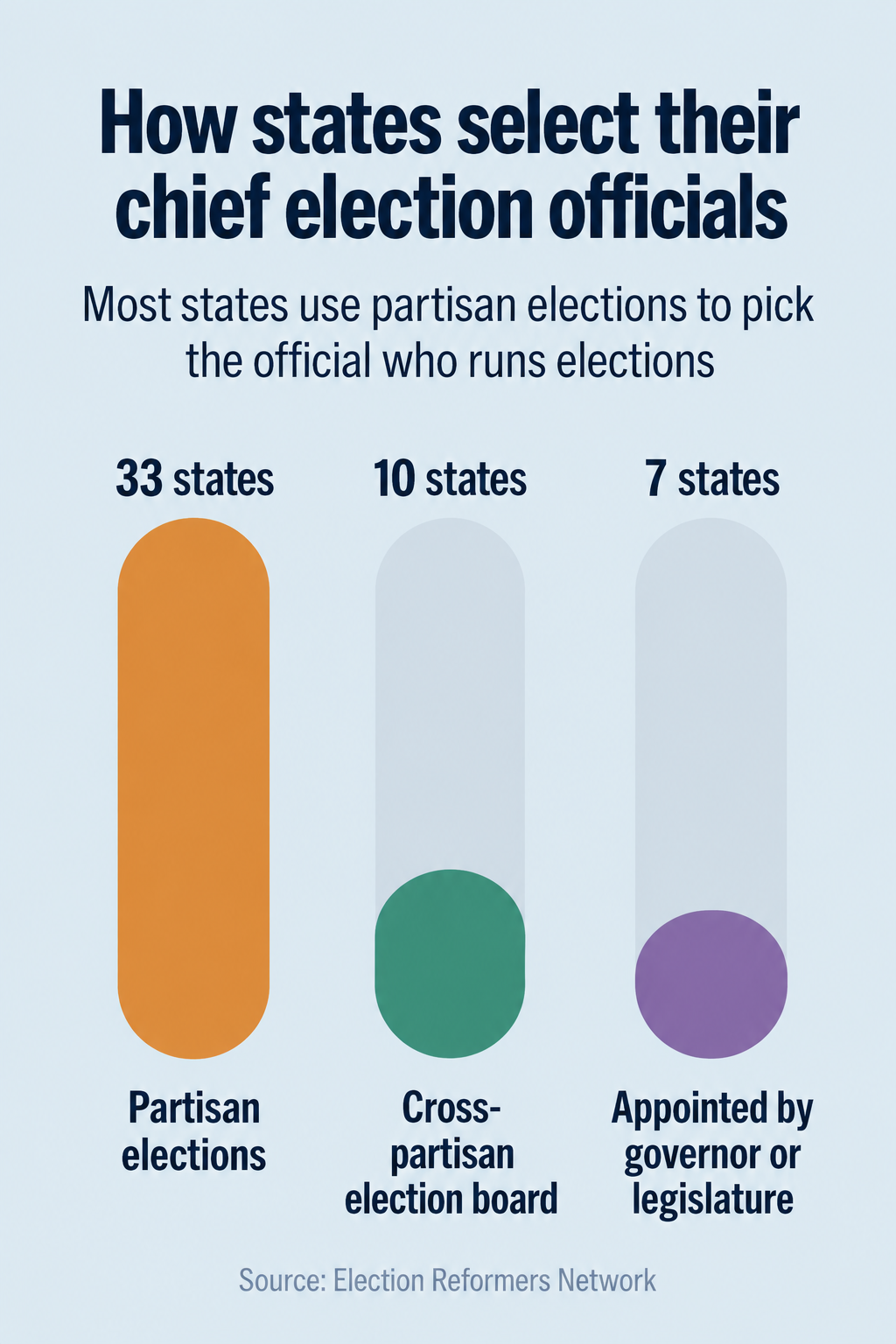
We trust secretaries of state to administer elections impartially, even though most are chosen through partisan contests that reward the very political pressures they are expected to resist.
Michigan Secretary of State Jocelyn Benson has published a precedent-setting firewall policy establishing clear steps to reduce potential conflicts of interest while she campaigns for governor
Utah's SB 194 mandates conflict of interest avoidance for election chief, neutrality for county clerks, to improve transparency and public confidence
In our time of increasingly dangerous partisan clashes, we need to prioritize election governance reforms that ensure those in charge are visibly neutral, impartial, and above the fray. These changes can be a huge step toward restoring sanity to our democracy.
ERN Executive Director Kevin Johnson recently sat down with the Sutherland Institute, a Utah-based conservative think tank, to discuss a critical question of election governance: should county clerks be chosen in partisan elections?
Michigan Secretary of State Jocelyn Benson has published a precedent-setting firewall policy establishing clear steps to reduce potential conflicts of interest while she campaigns for governor
Local election officials (LEOs) are the frontline administrators of American democracy. Increasing challenges to public confidence in elections emphasize the importance of structural reforms to support the officials charged with impartially running our elections.
This resource assesses how America's LEOs are selected and how they operate alongside other relevant entities, such as election boards.
Utah's SB 194 mandates conflict of interest avoidance for election chief, neutrality for county clerks, to improve transparency and public confidence
In a time when our democracy is under threat, increasing polarization represents a growing risk to the nonpartisan functioning of local election boards—which are the frontlines of our democracy. This proposal offers an innovative new structure for local election boards that would encourage greater neutrality while still allowing efficient decision making.
ERN has designed a new, broadly representative state election board that will have authority over ballot initiatives, set election policy in line with state law, certify results, and nominate a nonpartisan professional chief election official.
Originally published on The Economist website. A mostly bureaucratic endeavour is becoming a partisan battleground. Otero County, in New Mexico, is home to fewer than 70,000 people. Yet the rural municipality found unfortunate fame recently when local officials refused to certify the results of their primary elections, held on June 7th. New Mexico's secretary of state...
