

The Problem Solvers MAPS Act (H.R.10379)
One nation. Common rules for fair congressional maps.
Bipartisan legislation led by Representatives Mike Lawler (R-NY) and Salud Carbajal (D-CA)
The Problem Solvers' Map-drawing Accountability and Principled Standards (MAPS) Act would establish nationwide standards for how congressional districts are drawn, prohibiting mapmakers from designing districts to favor or disadvantage political parties, candidates, or incumbents.
Introduced on September 15, 2026, by members of the bipartisan Problem Solvers Caucus, the legislation addresses a fundamental weakness in American elections: while voters in every state elect members of the same Congress, the rules for drawing their districts vary widely.
The problem: 50 states, no common standard for fair maps
Every ten years, congressional districts are redrawn to reflect population changes recorded by the U.S. Census. Federal law establishes certain basic requirements, including equal population and single-member districts. But states follow different additional rules, and many leave decisions about district boundaries largely in the hands of elected politicians.
That patchwork creates opportunities for partisan gerrymandering—the manipulation of district boundaries to advantage one political party or protect incumbent officeholders.
The consequences extend well beyond the shape of a map. Gerrymandering can reduce meaningful electoral competition, insulate elected officials from accountability, weaken representation for voters outside the dominant party,and contribute to polarization in Congress.
The numbers illustrate the problem.
- Only 32 of 435 House seats are classified as competitive in 2026, according to Election Reformers Network's September 2026 congressional briefing.
- 34.8 million Americans were moved into different congressional districts between 2024 and 2026, according to Protect Democracy's September 2026 analysis.
- 71% of Americans oppose allowing states to draw congressional districts to favor one political party, according to a 2026 Economist/YouGov survey.
The recent wave of mid-decade redistricting has added urgency. When on estate redraws its congressional map for partisan advantage, other states may feel pressure to respond in kind. The result is a national contest for partisan advantage, even though congressional elections are supposed to represent voters—not mapmakers.
The solution: Clear standards for every state
The MAPS Act would require every state to follow a common set of principles when establishing congressional districts.
- Keep districts geographically connected. Each district must consist of contiguous territory, with a limited exception for areas surrounded by water.
- Draw reasonably compact districts. Districts must be as compact in form as practicable, discouraging unnecessarily sprawling or irregular boundaries.
- Prohibit partisan and incumbent favoritism. Districts may not be drawn for the purpose of favoring or disfavoring electoral competition, an incumbent, a particular candidate, or a political party.
- Ensure equal population. Congressional districts must achieve population equality as nearly as practicable, consistent with the U.S. Constitution.
- Respect existing communities and boundaries. States must consider preserving established political subdivisions, including counties, cities, towns, and tribal land boundaries.
Together, these requirements would create a consistent federal baseline while leaving states responsible for developing their own congressional maps.
Why national standards matter
State-level redistricting reforms have demonstrated that change is possible. Independent commissions and other safeguards have helped move map-drawing away from direct partisan control in some states.
But state-by-state reform has limits. When some states adopt stricter safeguards while others continue drawing maps for partisan gain, pressure builds to abandon those protections.
The MAPS Act would address that imbalance by establishing common standards applicable nationwide. Every state would operate under the same core requirements, regardless of which political party controls its government.
Congress has explicit constitutional authority to regulate congressional elections. In Rucho v. Common Cause (2019), the Supreme Court held that partisan-gerrymandering claims present political questions beyond the reach of federal courts, while recognizing Congress's authority to address partisan gerrymandering through legislation.
The MAPS Act would exercise that legislative authority by establishing substantive national map-drawing rules.
What the MAPS Act would—and would not—do
The legislation would establish national standards governing the shape,population, and permissible purposes of congressional districts.
It would not itself require states to establish independent redistricting commissions, prohibit mid-decade redistricting, or create a new federal process for resolving map challenges.
Those subjects are addressed in three companion bills introduced by the Problem Solvers Caucus:
- TRUST Act (H.R. 10378): Limits repeated congressional redistricting between decennial censuses, subject to specified exceptions.
- Independent Commissions Act (H.R. 10380): Establishes requirements for independent citizen redistricting commissions.
- COURTS Act (H.R. 10381): Establishes a more uniform federal process for congressional redistricting challenges.
Together, the four bills address different parts of the redistricting system: the rules, the timing, the mapmakers, and the courts.
Bipartisan congressional leadership
The MAPS Act is co-led by two members of the Problem Solvers Caucus:
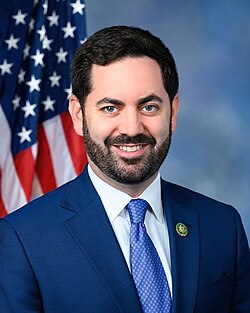

The bill was introduced with support from 11 House members, including Representatives Brian Fitzpatrick (R-PA), Tom Suozzi (D-NY), Jeff Hurd (R-CO),Ed Case (D-HI), Nick LaLota (R-NY), Debbie Dingell (D-MI), Ryan Mackenzie(R-PA), Donald Norcross (D-NJ), and Darren Soto (D-FL).
The legislation reflects a bipartisan effort to establish shared rules for congressional representation, regardless of which party controls the map-drawing process.
Sources and further reading
- Problem Solvers Caucus announcement, September 16, 2026
- Election Reformers Network, The Case for Congressional Action, September 2026 briefing.
- Protect Democracy, What Gerrymandering Costs Voters, September 2026.
- Economist/YouGov, April 2026 survey on partisan redistricting.
- Rucho v. Common Cause, 588 U.S. 684 (2019).