
Why Germany Lets a Statistician Run Its Elections
In the United States, election officials have become unlikely protagonists in the country’s political drama.
Secretaries of state defend results under intense public scrutiny, local clerks face threats and harassment, and technical decisions are increasingly interpreted through a partisan lens.
Our system places enormous weight on the integrity and courage of individual officials. It assumes that the people running elections will act neutrally, even when they are elected in partisan races and operate inside a highly polarized political environment.
It’s a fragile arrangement.
Now consider a different model. In Germany, the person responsible for administering federal elections is not a politician at all. It is the country’s chief statistician.
That choice reflects a very different philosophy about election administration: counting votes is a technical function, not a partisan prize.
Germany’s system offers an instructive example of how democracies can design institutions that protect elections from political interference. While the United States cannot simply copy the German model, the principles behind it offer useful lessons at a time when election governance faces growing strain.
A system built after democratic collapse
Germany’s approach to elections grew out of the country’s experience after World War II. When the Nazi regime collapsed in 1945, the architects of modern German democracy confronted a central question: how could a democratic system be protected from being undermined from within?
Their answer became known as wehrhafte Demokratie, or “militant democracy.” The idea was that democratic institutions should not merely be neutral. They should be designed to defend democracy itself against political manipulation and extremism.
Election administration became part of that design.
Rather than placing elections directly under partisan political control, Germany constructed a system that combines professional administration, balanced oversight, and legal protections against interference.
Three principles define how the system works.
Professional administration
Germany deliberately assigns the role of Federal Returning Officer (the official responsible for organizing federal elections) to the head of the national statistical office. This choice sends a powerful signal: election administration is fundamentally a technical responsibility. The person overseeing the process is selected not for partisan loyalty but for professional competence.
The Federal Returning Officer prepares elections, oversees the process of determining official results, and publishes electoral statistics. Because the role is embedded within a professional statistical agency, it emphasizes administrative expertise rather than political authority.
The goal is simple: remove the perception that the “referee” of elections belongs to one political team.
Oversight through balanced committees
Germany also relies on balanced electoral committees that combine partisan representation with neutral oversight. At the federal level, the Electoral Committee includes: the Federal Returning Officer as chair, eight members drawn from eligible voters and nominated by political parties, and two judges from the Federal Administrative Court.
This structure means that political rivals monitor one another’s actions. If a party attempts to manipulate the rules, its opponents are sitting at the same table. While electoral boards across the United States also regularly rely on this same principle of “adversarial partisanship,” the German model has a key advantage: it incorporates neutral officials as tiebreakers. In addition to the aforementioned role of the chief statistician, the presence of judges provides a neutral authority capable of resolving disputes and preventing stalemate.
Equally important, committee meetings are open to the public and the press, ensuring that deliberations take place in full view of citizens and journalists. Transparency transforms what could be backroom political bargaining into a visible demonstration of democratic procedure.
Legal independence
Although the Federal Returning Officer formally sits within the Ministry of the Interior, German law includes a critical safeguard: the ministry cannot issue instructions directing how elections should be conducted.
This “no-instruction” clause creates a legal firewall separating technical election administration from executive political authority. Electoral committees and local election bodies likewise function as self-governing entities operating under public scrutiny rather than hierarchical political command. The result is a system designed to make interference both difficult and visible.
Lessons for the United States
Germany’s electoral system operates in a very different political and constitutional environment. But the underlying principles behind Germany’s approach can still inform reforms in the American context.
Professionalizing election leadership
In most US states, the chief election official is a partisan elected officeholder. Historically, most of these officials have carried out their responsibilities with professionalism. But the structure itself creates a vulnerability: even neutral technical decisions can be perceived as politically motivated.
One possible reform would be to move toward a professional class of senior election administrators, selected through nonpartisan processes that emphasize expertise rather than political loyalty. States could also consider multi-stakeholder nominating commissions to identify qualified candidates for these roles, ensuring that appointments reflect professional merit rather than partisan allegiance.
Neutral anchors for election boards
Many US state election boards are evenly divided between Democrats and Republicans. In periods of high political tension, this structure can produce deadlock, leaving certification disputes unresolved or pushing them into lengthy court battles.
Germany’s model suggests a potential alternative: a balanced board with a permanent neutral chair. A structure such as a “2-2-1” board—two Democrats, two Republicans, and one neutral professional—could provide a tie-breaking mechanism that allows decisions to move forward while maintaining partisan balance.
Legal firewalls for election officials
Finally, the German model highlights the importance of clear statutory protections for election administrators. In recent years, American election officials have faced rising political pressure and, in some cases, threats or harassment.
One practical reform would be to clarify in law that core election tasks, such as testing machines, counting ballots, and certifying results, are mandatory ministerial duties, not discretionary political choices. By defining these responsibilities clearly, the law can shield officials from political interference and ensure courts can act quickly if certification or other required actions are blocked.
Designing trust
Germany’s experience offers a broader lesson about democratic governance:
Electoral integrity does not depend on finding perfectly neutral individuals. It depends on designing institutions that make manipulation difficult and transparency unavoidable.
Structural safeguards do not eliminate political conflict. But they ensure that the machinery of democracy continues to function even when politics becomes intensely polarized.
At a moment when trust in American elections is increasingly fragile, the question is not whether the United States can simply replicate Germany’s model. It is whether we are willing to learn from a system built with one central insight: democracy survives not by assuming good faith, but by building institutions that protect it.
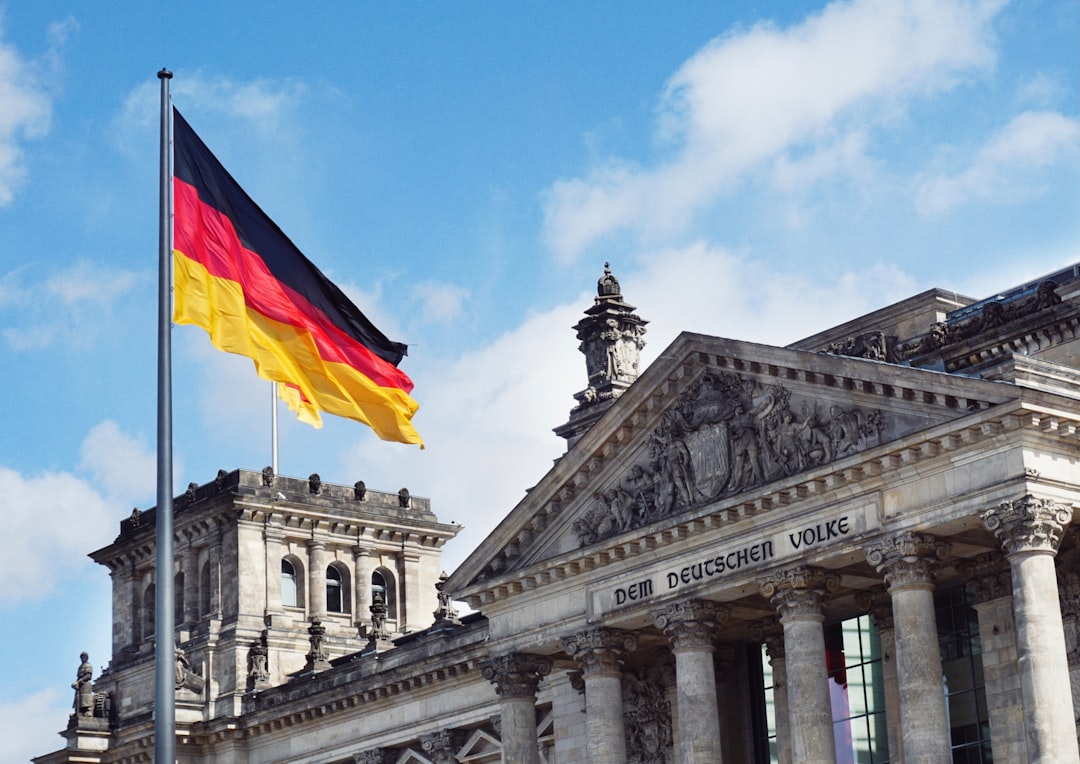
Photo credit: Photo by Maheshkumar Painam on Unsplash