
What I Remember from 1994 (And What Worries Me Now)
I can still remember the way the ballroom in Johannesburg shook.
It was the evening of May 2, 1994, in the Carlton Hotel in Johannesburg.
I was there as part of an international election observer mission, watching South Africa step out of apartheid and into something new.
The hotel was packed. People were tired — the election period had been exhausting, and for days a tense vote counting process had taken place. But exhilaration was in the air.
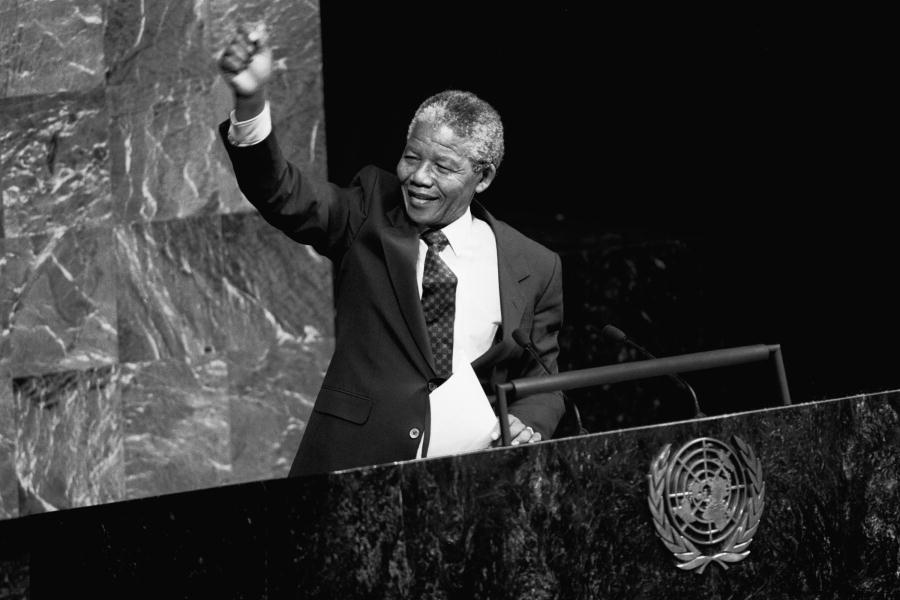
Then Nelson Mandela stepped up to the microphone. He announced that the African National Congress had won.
“We can loudly proclaim from the rooftops: Free at last.”
In reality, this was bigger than a party victory. Millions of people voted freely for the first time in their lives — and it counted.
It was the victory of democracy over autocracy.
The room absolutely erupted. People were shouting, laughing, sobbing, and grabbing the hands of total strangers. I turned to Princeton Lyman, the American Ambassador, and said that I couldn’t wait to tell my grandchildren about this event (that took 30 years!).
A lifetime in democracy work
For nearly forty years, I’ve worked on democracy and human rights — as a Foreign Service Officer, with the National Democratic Institute, as a researcher, evaluator, professor, and consultant across Africa and beyond. I’ve seen the promise and the setbacks, the waves of democratic expansion and retrenchment around the world.
And in recent years, I have seen forces at work that have eaten away at our American democracy’s vitality.
We are living through rising authoritarian impulses, a deeply polarized political culture, and institutions that in some cases have become ossified and vulnerable to abuse. The way we run our elections — who controls them, who draws the maps, who we ask to tell the truth about the results — is under strain.
The United States is not immune to the pressures that have bent or broken democratic systems elsewhere.
The encouraging news is that our institutions, though stressed, are still standing. We have time to fortify them. But they need reinforcement, and soon.
Why I serve on the Board of Election Reformers Network
That’s why I’m proud to serve as chair of the board of Election Reformers Network.
But we cannot assume the arc will bend the right way on its own. Reform is possible — it just never happens by accident, and it doesn’t happen when people assume “the system will take care of itself.”
What gives me hope
In all my years working on democracy and human rights, one pattern has held: The strongest guardrail is an engaged public.
Every major democratic breakthrough I’ve witnessed, local civil society movements across West, East, and Central Africa, came from ordinary people choosing to participate, to pay attention, and to insist on better rules.
Here, we still have time to get this right.
If this work resonates with you, I hope you’ll stay in the conversation and join us in shaping what comes next. If you’re moved to support our efforts, your contribution is tax-deductible — but there’s no expectation to give. Staying engaged is the most important thing.
Thank you for reading, and for caring about the future of our democratic system.
Header image credit: “Nelson Mandela (ANC) Addresses Special Committee Against Apartheid” by United Nations Photo, CC BY-NC-ND 2.0.